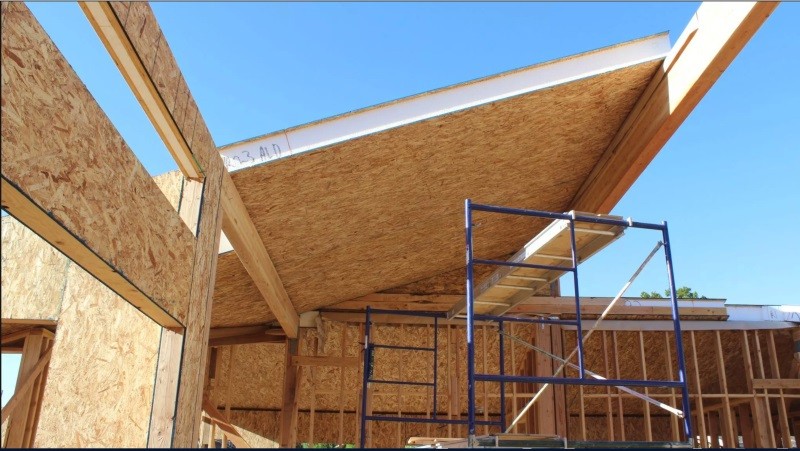
Structural insulated panels are a build device that may act as an alternative to traditions construct strategies inclusive of brick and block. Abbreviated to SIPs, and once in a while erroneously known as SIPs panels, they’ve end up one of the maximum popular cutting-edge strategies of production in current years.In truth, it’s predicted that structural insulated panels make up eight% of self builds, and for right reason. They SIPS have a few tangible blessings for your build, which includes rushing up the initial stages of your construct, getting you to a watertight stage speedy, while delivering wonderful airtightness for a material first build. In our entire guide to structural insulated panels, we will now not handiest discover those benefits in more detail, but have a look at the drawbacks, in addition to elements along with value and advice for the way to make a SIPs build a achievement.
What are Structural Insulated Panels?
Structural insulated panels are, in easy terms, pieces of insulative foam sandwiched among forums of oriented strand board (OSB) used as a production system for homes. These blank panels start their life in a 1.2m-huge format and come in numerous standardised heights from 2.4m to 7.45m.The panels are then reduce to size, wood aspect pieces introduced and any openings shaped. The equal kind of structural insulated panel is used for building the outside walls, any inner loadbearing walls and the roof panels.
What are the Advantages of Building with Structural Insulated Panels?
One of the important thing benefits over conventional wooden body or contemporary closed timber body systems is the spacing of the vertical wooden studs within the partitions. In a wooden frame building these are at 600mm centres, even as in a SIPs wall they are at 1200mm centres. Therefore the quantity of poorly appearing timber within the wall is halved. This dramatically reduces repeated cold-bridging in the building.Factory-made SIPs panels might be more correct than on-web site reduce wooden frames, and this enables to restriction gaps in production. This, together with the inherent airtightness of oriented strand forums (OSB) and a inflexible insulation center, facilitates to restrict air leakage in the building, making SIPs a extraordinary suit for Passivhaus projects.
As the roof panels are structural there may be no need for classic roof trusses — the panels can without problems span 4.8m from eaves to ridge and sit down on a boxed-in metal beam or a function glulam wooden beam. This can remodel the pinnacle floor from a widespread 2.4m ground-to-ceiling peak, up to a double peak of three.6m.
Are There any Disadvantages to Structural Insulated Panels?
The major difficulty with SIPs is when they’re uncovered to moisture, and consequently there are a few web sites that do not in shape a SIPs construct. It’s no longer endorsed to use structural insulated panels on plots in flood zones or below ground, so here a masonry build might be triumphant.
However, there is not anything preventing you growing a hybrid construct, with a masonry floor ground and SIPs for the higher storeys. While the airtightness factor is a exceptional of SIPs, it also approach you’ll need to have adequate air flow to keep away from condensation constructing up and air becoming stale in the home. Hile the airtightness element is a quality of SIPs, it additionally method you will need to have ok air flow to keep away from condensation building up and air turning into stale inside the home. You may discover that as SIPs are a specialist construct gadget, you might discover it harder to discover developers who are skilled in using them.
Are Structural Insulated Panels Load-bearing?
Yes, structural insulated panels have applications. First and major, they may be used as a complete structural system for a construct. Secondly, SIPs are also used for infill walling for metallic, concrete, all rightor glulam timber body structures.
 SIPS
SIPS 
Leave a comment